
2025
Kahve Dünyası CarPlay: Designing Coffee Ordering for the Road
A concept for discovering nearby Kahve Dünyası stores and placing a prepaid favourite order through CarPlay, without reaching for a phone.

What if ordering coffee on the road felt less like using an app and more like making one clear driving decision? Together with Cansu Gürsoy, I developed a concept for Kahve Dünyası that brings store discovery, a preconfigured favourite order, payment, and pickup guidance into Apple CarPlay. The experience was designed to let drivers find a suitable branch on their route and order ahead without handling their phone.
At a glance
Role
Product Designer: Concept, UX/UI and Interaction Design
Collaboration
Concept developed with Cansu Gürsoy
Scope
Experience Strategy · CarPlay Research · User Flows · Information Architecture · Interaction Design · Visual Design · Concept Prototyping
Platform
Apple CarPlay concept for the Turkish market
Outcome
An end-to-end concept connecting nearby-store discovery, favourite-order shortcuts, prepaid checkout and pickup navigation.
Context
Coffee is often part of a journey rather than the destination. A driver may want to collect a familiar drink on the way to work, between meetings, or during a longer trip, but the existing mobile pattern asks for exactly the wrong kind of attention: unlock a phone, search for a branch, browse a menu, configure a product, pay, and then return to navigation.
The initial idea sounded simple: show Kahve Dünyası stores in CarPlay and let someone order ahead. Once we placed it inside a driving environment, however, every extra choice became a safety, comprehension, and platform-design question.
The design challenge
We needed to compress a multi-step commerce journey into an interface that could be understood at a glance. The experience had to help a driver identify a useful store, understand whether it fit the route, choose an already prepared order, confirm the correct branch and payment, and continue towards pickup with minimal visual and cognitive demand.
This was not a smaller version of the mobile app. It required a different product model: fewer decisions, larger targets, shallow navigation, predictable states, and a clear separation between tasks that should be configured on the phone and actions that were appropriate to complete in the car.
Researching the constraints before designing the interface
We studied Apple’s CarPlay guidance, interaction patterns, navigation conventions, and the restrictions that shape glanceable in-car experiences. Rather than treating those rules as a visual checklist, we used them to decide what the product should and should not ask a driver to do.
That research changed the concept. Full menu exploration and detailed product customisation were deliberately moved out of the driving flow. The phone became the place to prepare favourite combinations and payment details; CarPlay became the place to choose a branch, select a prepared shortcut, review the essentials, and confirm.
A route-aware ordering model
The experience was organised around three entry points: Quick Order, Order History, and Stores. Together they supported the most likely driving intents without exposing the complexity of a full commerce application.
Stores
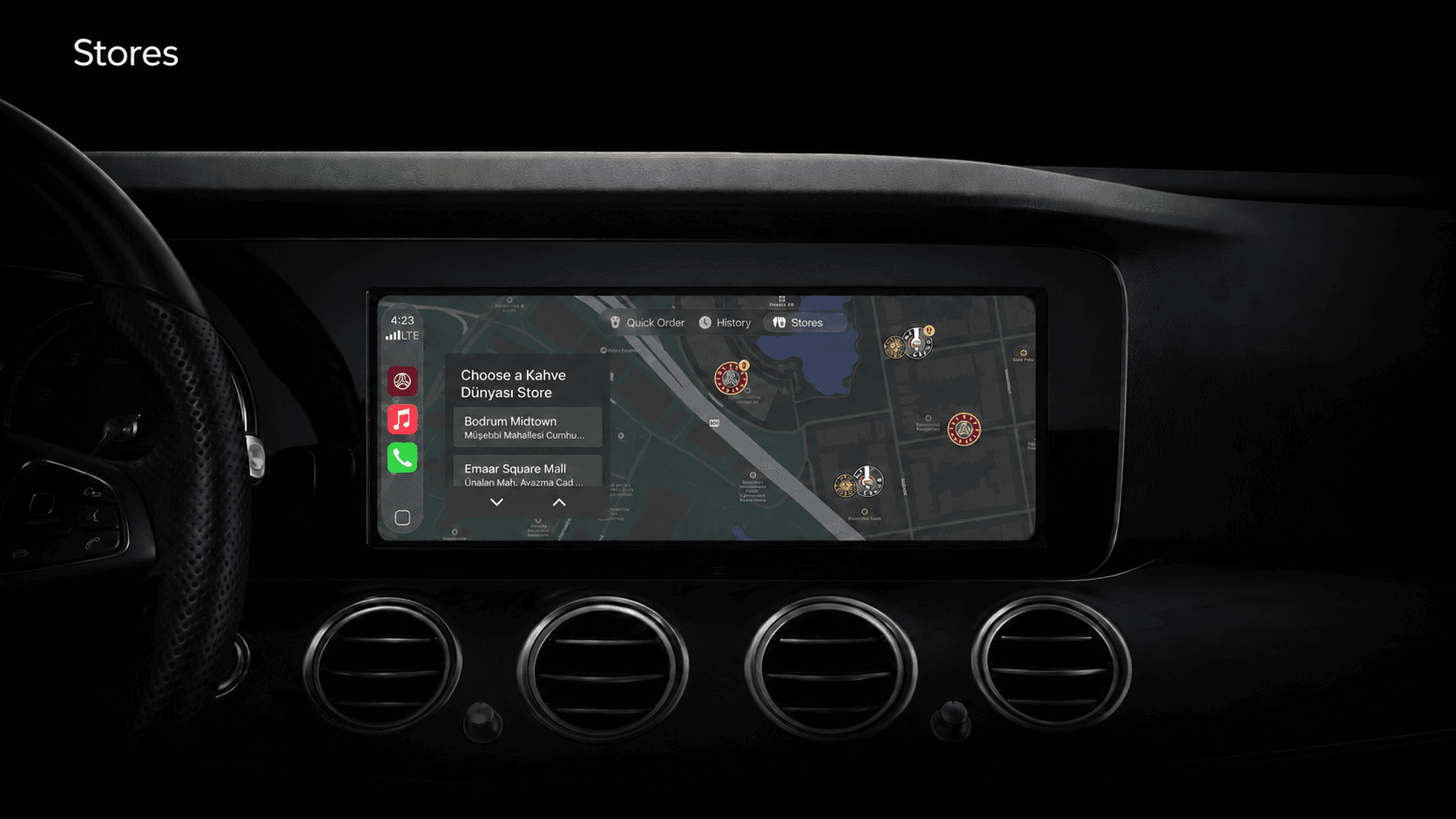
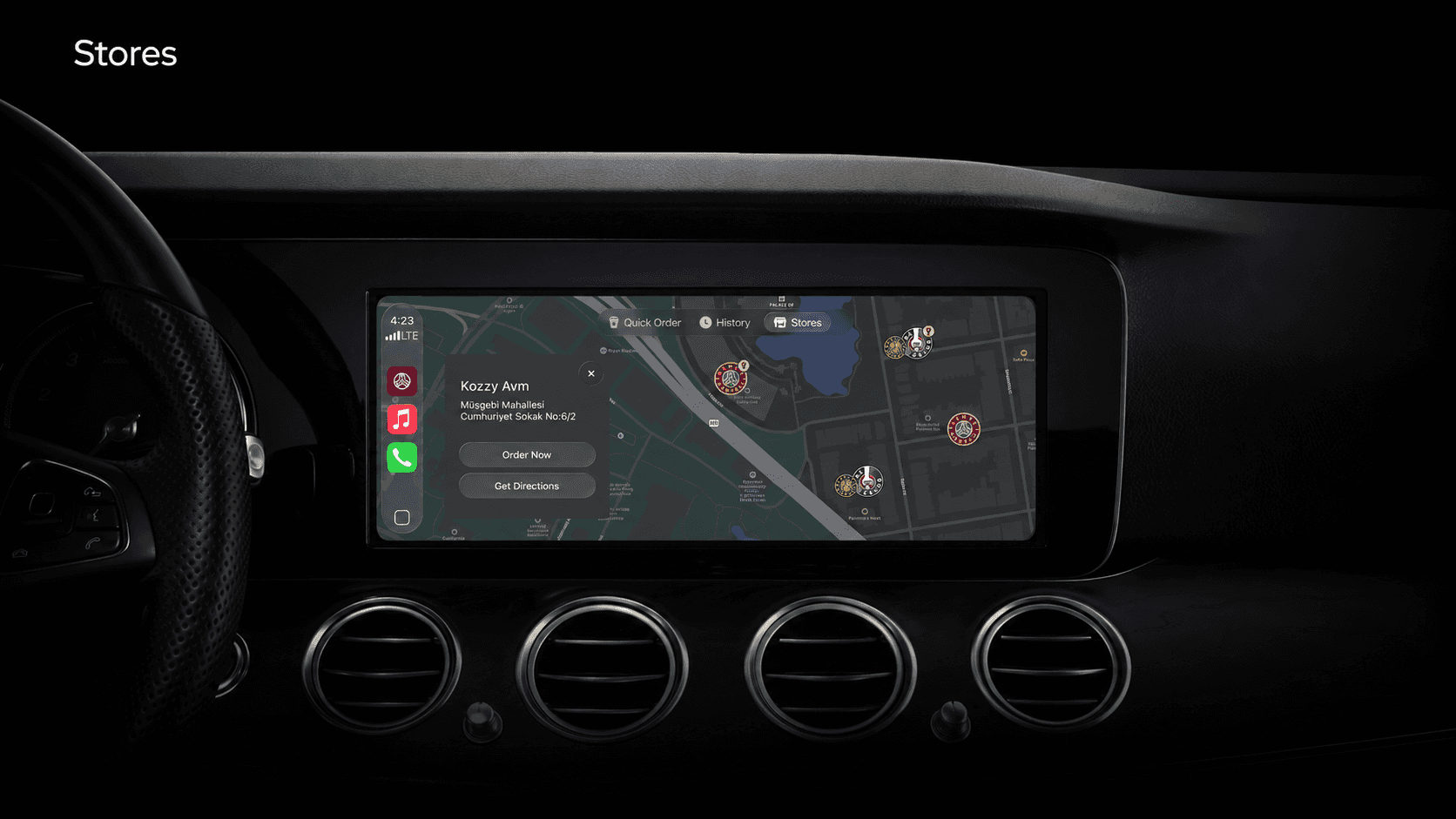
Nearby Kahve Dünyası branches were placed directly on the map so location and direction remained visible. A driver could compare nearby options, open a compact store card, choose to order, or request directions without moving through a deep hierarchy.
Quick Order
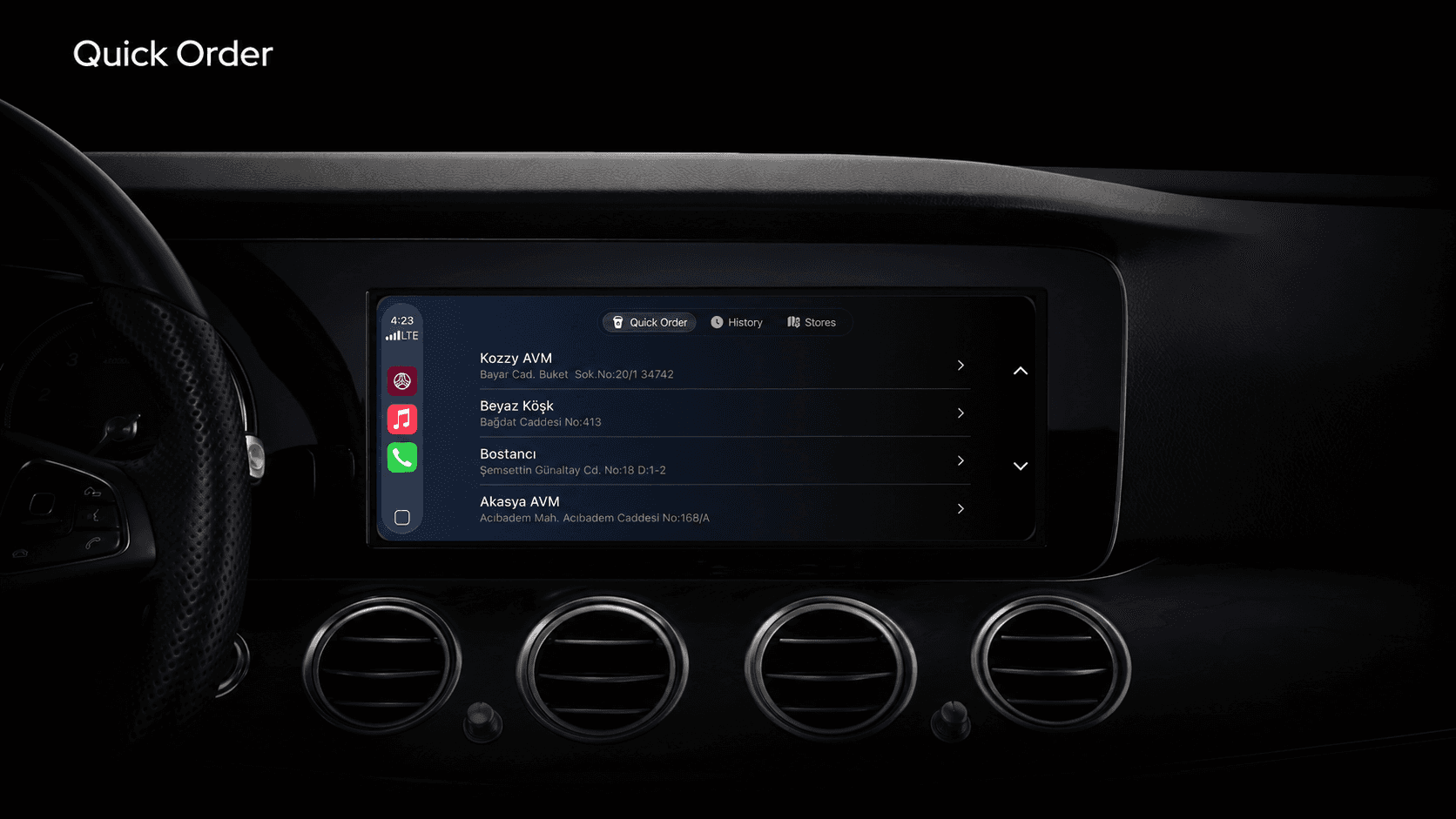
Quick Order used favourites prepared in advance on the phone. Instead of browsing categories or rebuilding a drink configuration behind the wheel, the driver selected a store-specific shortcut and moved directly towards confirmation. This made personalisation possible without importing the full menu into CarPlay.
Order History
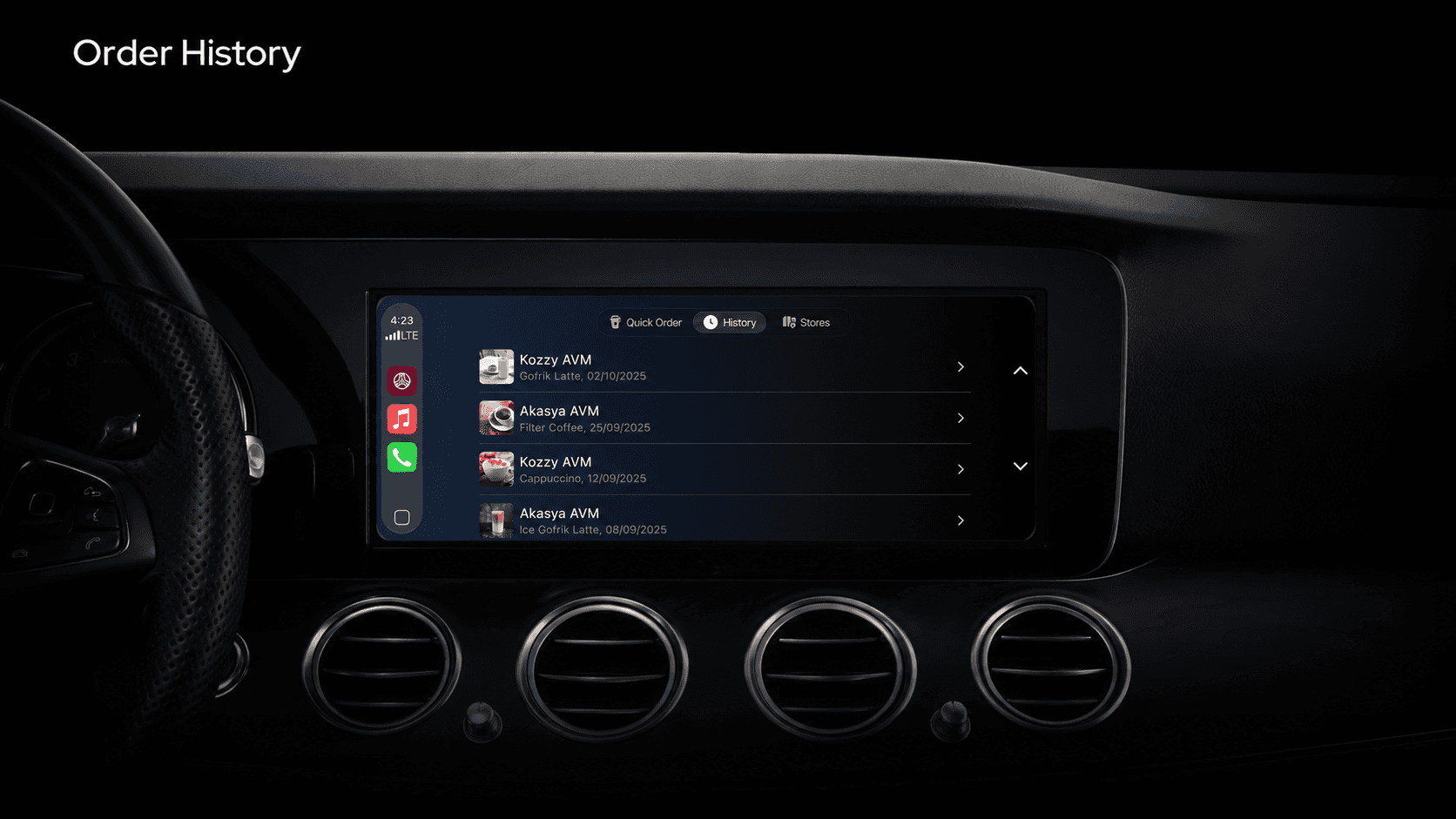
Past orders offered a second low-effort path for repeat behaviour. We designed both the populated history and its empty state so the system remained understandable for returning and first-time users. The goal was not to add another catalogue; it was to surface familiar choices that could be recognised quickly.
Key design decisions
1. Configure complexity before the drive
Product size, milk preference, extras, and payment details can create a surprisingly long decision tree. We treated those choices as setup work and kept them on the phone. CarPlay surfaced only ready-to-order combinations, reducing the driving interaction to selection and confirmation.
2. Make the branch part of the product decision
A coffee order is only useful when the pickup location fits the journey. Store selection therefore came before payment, with the branch, address, and map position kept visible throughout the flow. This reduced the risk of confirming the right drink at the wrong location.
3. Keep payment explicit but lightweight
The concept assumed a payment method had already been securely prepared in the mobile experience. Before placing the order, CarPlay presented a concise summary of the store, address, product, and pickup timing. One clear confirmation action preserved user control without recreating a checkout form in the car.
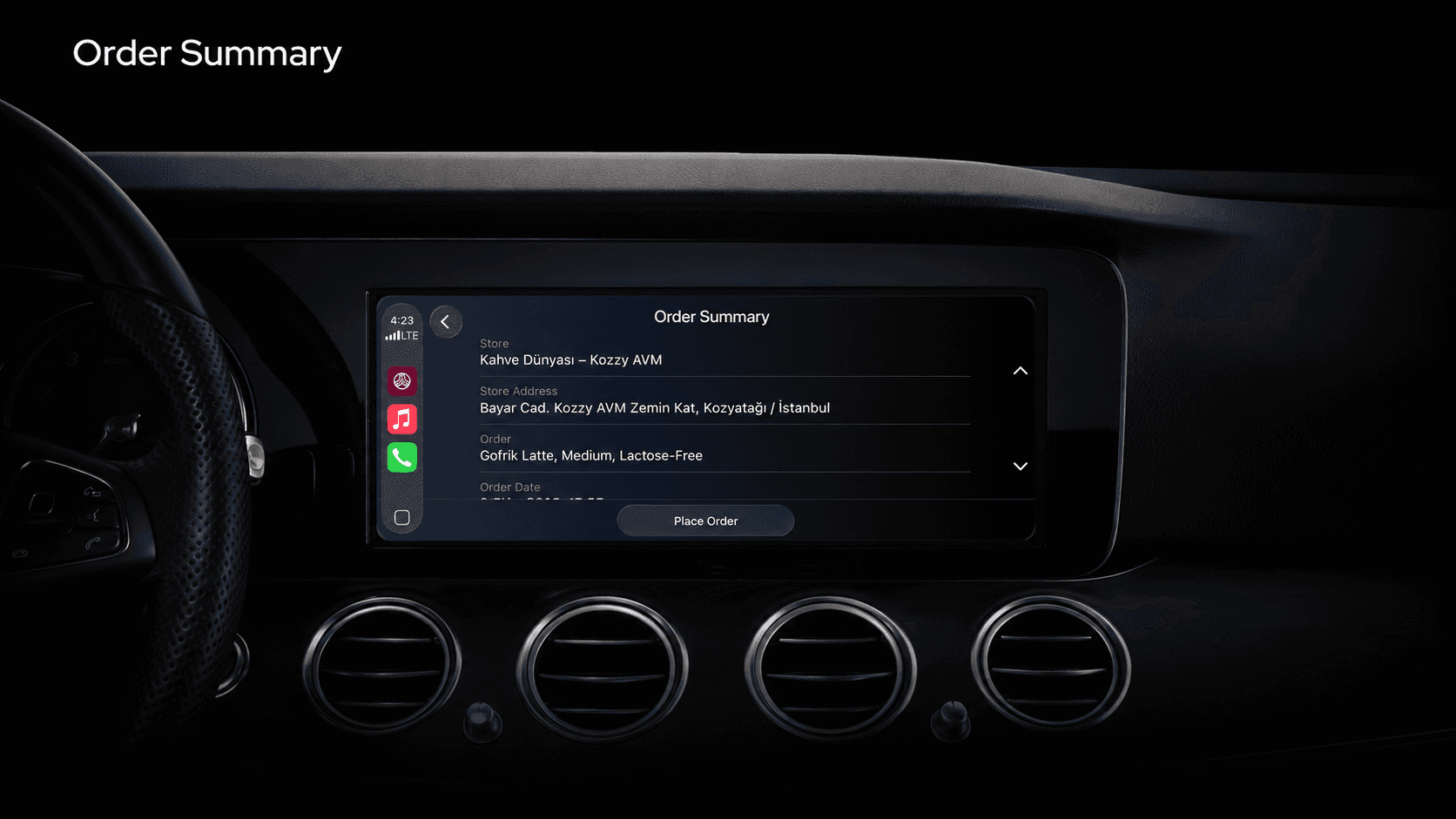
4. Close the loop with pickup guidance
A successful order was not the end of the journey. The confirmation state communicated when the drink would be ready and offered immediate directions to the selected branch. Ordering and navigation became one continuous flow rather than two disconnected tasks.
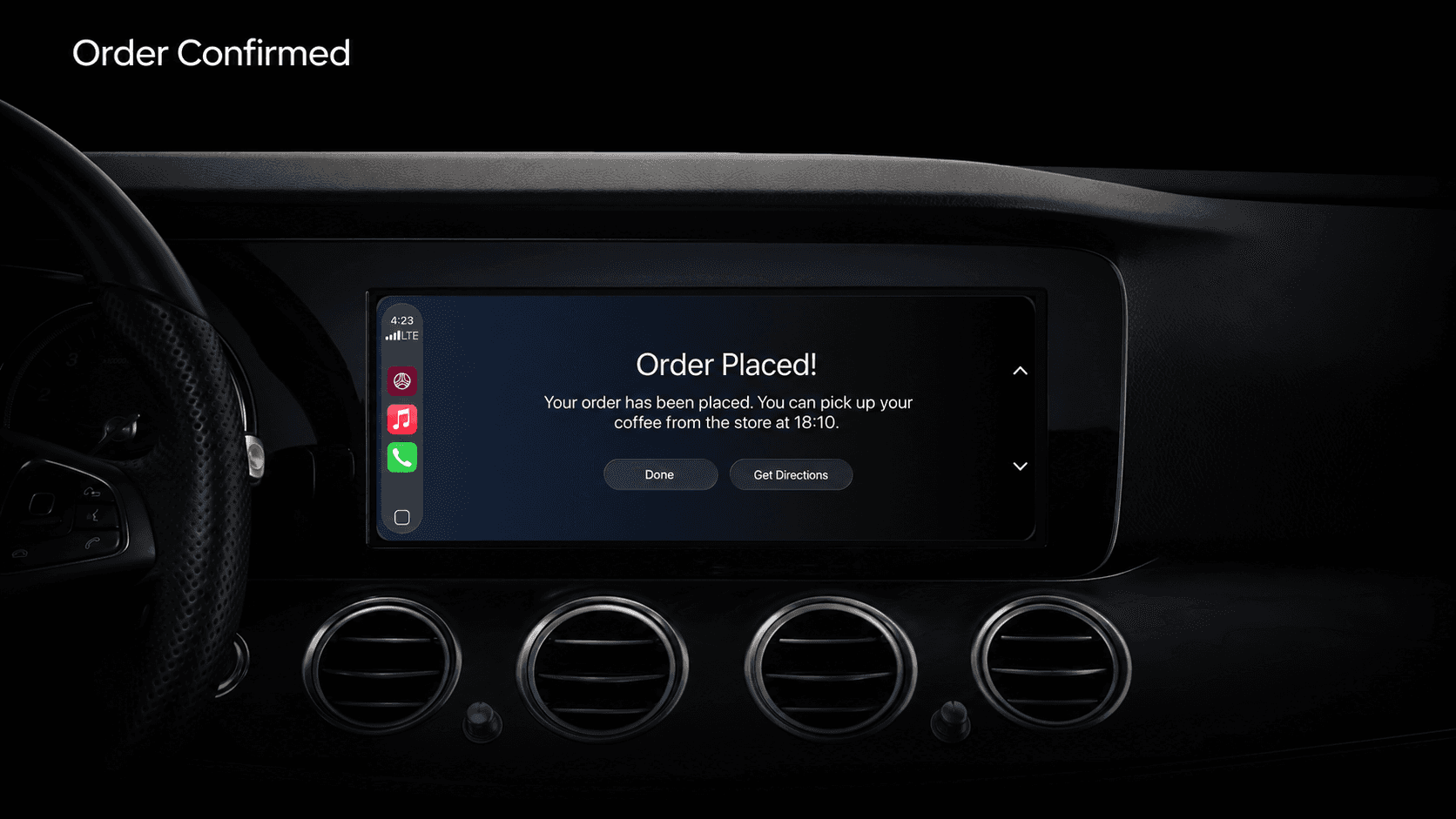
Designing the complete system, not only the happy path
We mapped the surrounding states that make the central idea credible: no previous orders, multiple nearby branches, store selection, repeated products, order review, successful payment, and the handoff to directions. Designing those states helped us test whether the simplified model still provided enough context at each decision point.
The interface followed the visual language of CarPlay instead of placing a branded mobile layout on a dashboard. Kahve Dünyası remained recognisable through its icon, store markers, product imagery, and restrained brand accents, while the surrounding interaction stayed familiar to the driving environment.
Concept outcome
The final concept demonstrated how Kahve Dünyası could extend a familiar repeat-purchase behaviour into the car without encouraging phone use. Drivers could discover branches along the journey, choose a product configured in advance, review and pay for the order, and continue directly into navigation for pickup.
Because this was a concept project, the outcome is an experience proposition rather than a shipped product or measured commercial result. Its value lies in making the opportunity tangible and showing how brand, commerce, mapping, payment, and in-car safety constraints could work as one coherent journey.
Route-aware discovery · Preconfigured favourites · Prepaid ordering · Pickup navigation · Reduced interaction while driving
What I learned
The project reinforced that reducing steps is not the same as simplifying an experience. Meaningful simplicity came from relocating complexity to the right moment: personalisation and payment setup before the drive, contextual store choice and confirmation during it. Apple’s constraints did not merely limit the interface; they helped us define a sharper product boundary.
Reflection
If we developed the concept further, the next step would be to validate it against real driving contexts and current platform eligibility: how quickly drivers recognise favourite orders, how route deviation affects branch choice, how pickup-time confidence should be communicated, and which tasks should be voice-led. I would also test handoff between the mobile app and CarPlay so preparation, ordering, navigation, and collection feel like one service rather than separate surfaces.
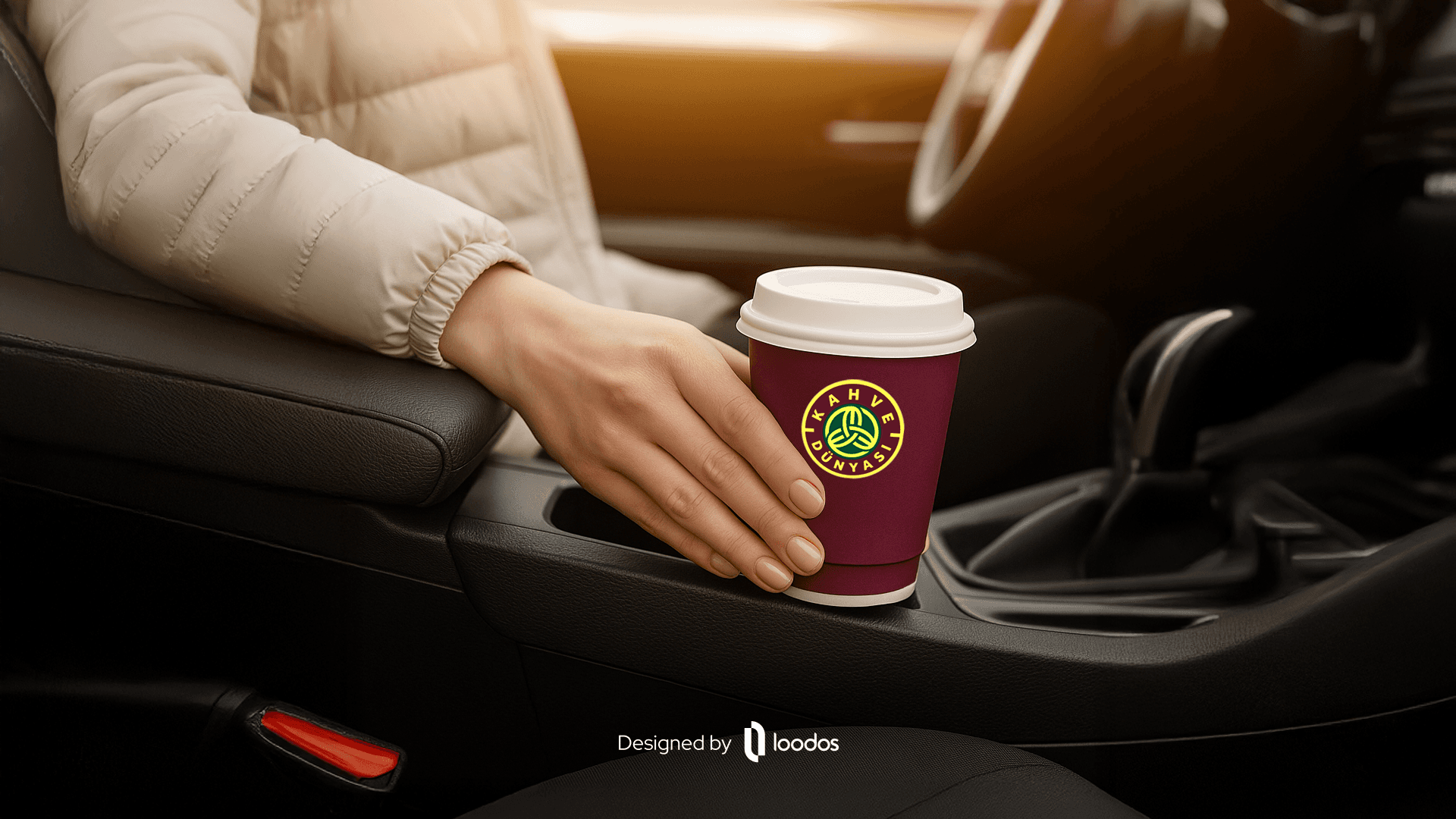
Concept created in collaboration with Cansu Gürsoy.